
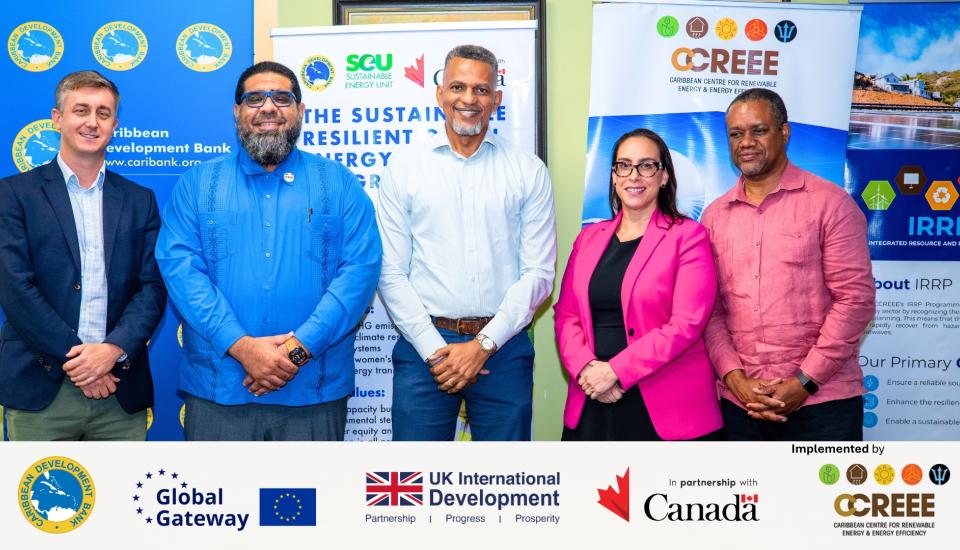
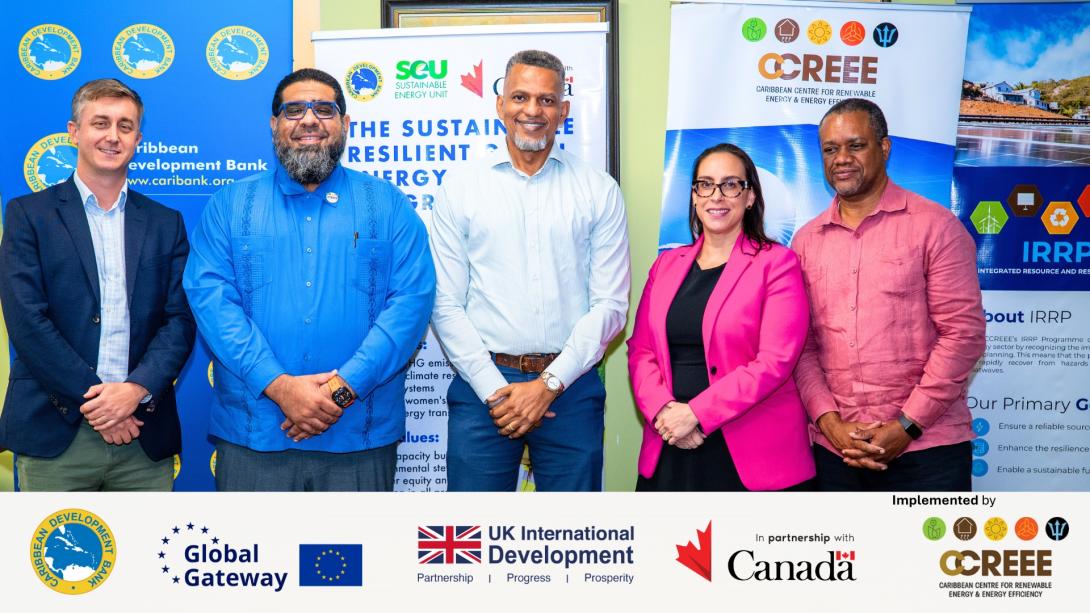
As the region observes CARICOM Energy Month under the theme Harnessing Energy, Advancing Resilient Development, CCREEE highlights the ASERT 2030 Regional Capacity Strengthening Programme and its work to build the institutional, technical and planning capabilities needed to advance sustainable energy development.
The Caribbean's energy transition calls for more than ambitious renewable energy targets and investment in new technologies. Countries must also have the institutions, technical expertise, reliable information and planning systems to turn their commitments into tangible results.
This year's CARICOM Energy Month theme, Harnessing Energy, Advancing Resilient Development, brings renewed attention to the relationship between sustainable energy development and the region's wider resilience priorities. It also provides an opportunity to examine the programmes and partnerships helping Caribbean countries strengthen their capacity to manage this transition.
One such initiative is the Accelerated Sustainable Energy and Resilience Transition 2030 (ASERT 2030) Regional Capacity Strengthening Programme (RCSA), launched by the Caribbean Development Bank (CDB) and the Caribbean Centre for Renewable Energy and Energy Efficiency (CCREEE) on July 22, 2026.
Three months after its launch, the approximately US$5.3 million programme is advancing an important area of regional energy development: strengthening the institutions, expertise and planning capabilities required to support long-term implementation.
With CCREEE serving as the implementing agency, ASERT 2030 RCSA forms part of the wider ASERT 2030 Framework, developed under CDB's leadership to accelerate sustainable energy investment across its Borrowing Member Countries.
Building the capacity behind the energy transition
The Caribbean's ability to advance its energy ambitions depends on the quality of its decision-making and the systems supporting it. Governments need reliable energy data to guide policy, effective planning frameworks to assess national priorities, and the technical and institutional capacity to prepare projects and attract investment.
These requirements are central to ASERT 2030 RCSA. With an implementation period of 30 months, the programme will address several constraints affecting sustainable energy development across the region, including gaps in energy information and data systems, limitations in planning and institutional capacity, challenges in project preparation, and the need to expand opportunities for women and young professionals in the sector.
At the programme's launch, CCREEE Executive Director Dr Mohammad Nagdee emphasised the importance of a coordinated, long-term approach to strengthening the region's energy sector. Individual projects can deliver important results, but lasting progress also depends on the systems and expertise that enable countries to assess their energy needs, evaluate available options, make evidence-based decisions, prepare investment-ready projects and sustain implementation.
ASERT 2030 RCSA is designed to strengthen this foundation through four interconnected areas of work.
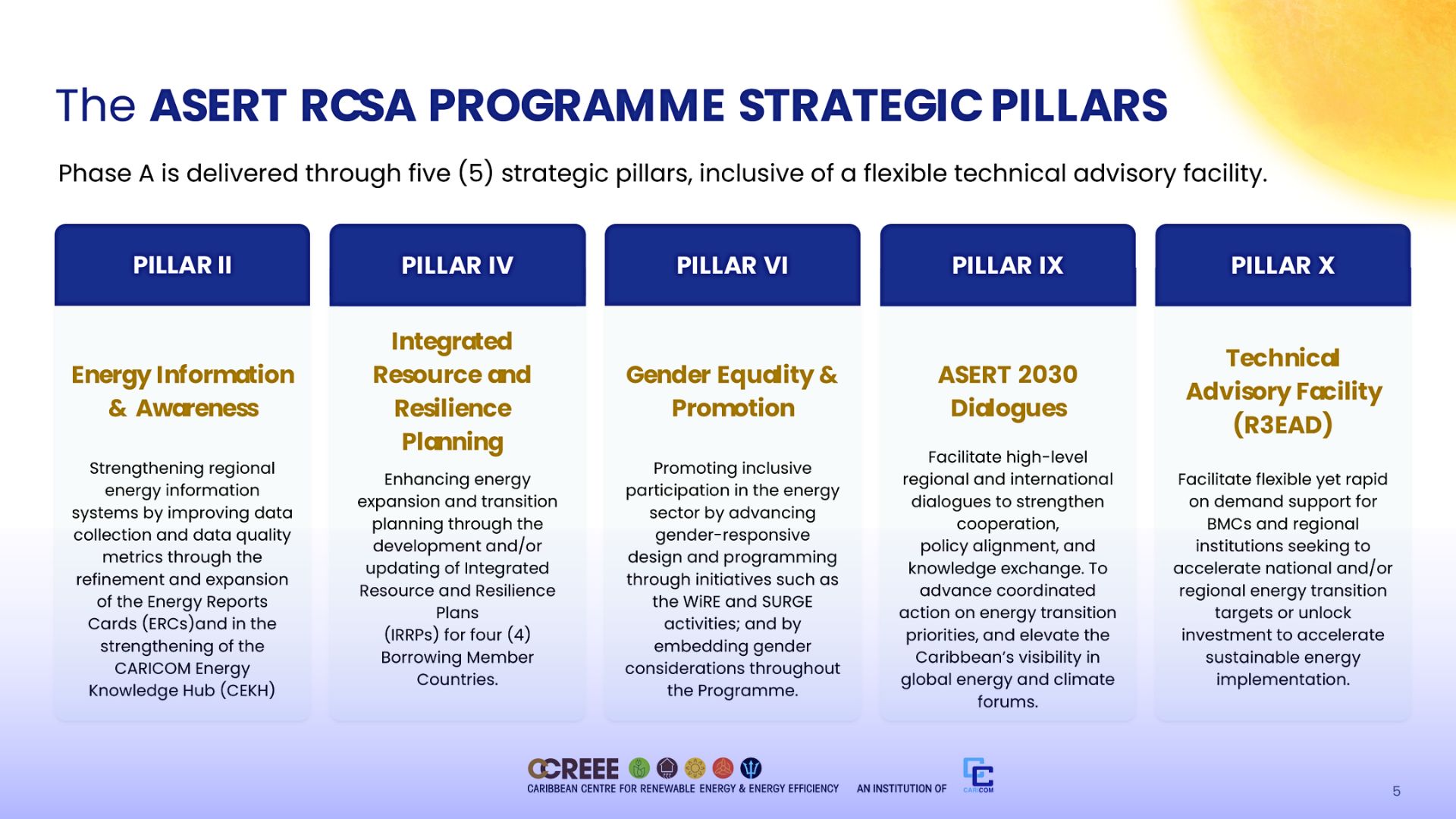
Four areas of regional capacity strengthening:
Energy information and knowledge systems
Effective energy planning and policy development depend on reliable, accessible and relevant information. Governments, utilities and other stakeholders need accurate data to assess sector performance, identify investment opportunities, understand emerging challenges and determine where interventions are most needed.
ASERT 2030 RCSA will support improvements in energy information and knowledge systems, strengthening the evidence base available to national decision-makers and the regional institutions that support them.
Integrated resource and resilience planning
Energy planning must account for more than electricity demand and the cost of supply. It requires consideration of available energy resources, infrastructure needs, climate-related risks, energy security and the longer-term development priorities of national economies.
Through this area of work, the programme will support stronger integrated resource and resilience planning, helping countries assess their energy options and make decisions that account for both development objectives and the vulnerabilities of Caribbean energy systems.
Gender equality and women's leadership
The Caribbean's energy transition requires the knowledge, experience and leadership of women across the sector. While women contribute in technical, professional and policy-related roles, greater representation in decision-making and leadership positions remains an important priority.
ASERT 2030 RCSA will incorporate gender equality and women's leadership into its capacity-strengthening activities. This includes recognising the value of mentorship, professional development and opportunities for women to influence energy policy, planning and implementation.
Strategic policy dialogue and regional cooperation
Many of the challenges affecting Caribbean energy systems are shared across national boundaries. Addressing them requires meaningful engagement among governments, utilities, regulators, regional institutions, development partners, academia, civil society and the private sector.
The programme will facilitate strategic policy dialogue and strengthen regional cooperation, creating opportunities for stakeholders to exchange knowledge, address common challenges and improve coordination across the sector.
Measuring progress through practical results
The value of capacity development must ultimately be reflected in the improvements it enables.
At the programme's launch, Dr Nagdee identified the importance of assessing its contribution through practical indicators: whether institutions are making better-informed decisions; whether countries are better equipped to develop and implement credible, resilient energy plans; whether more projects are progressing from concept to investment readiness and implementation; and whether women and young professionals are gaining greater representation in positions of leadership and influence.
These considerations provide a useful basis for assessing the programme's contribution over its implementation period.
Training activities, technical resources and institutional support are important components of capacity development. Their longer-term value lies in how effectively they strengthen decision-making, improve project preparation and enable countries to manage their energy sectors.
This also speaks to the importance of developing and retaining Caribbean expertise. The region needs professionals who understand its energy challenges, institutional environments and development priorities, and who can apply that knowledge to the planning and management of sustainable energy systems.
A regional partnership for sustainable energy development
Implementation of ASERT 2030 RCSA brings together CDB, CCREEE, national governments, development partners and other stakeholders. The programme's financing reflects support from CDB, the Government of Canada, the European Union and the United Kingdom.
For CCREEE, its role as implementing agency builds on the Centre's mandate as the Caribbean's specialised regional institution for renewable energy, energy efficiency and sustainable energy development. It also draws on the Centre's experience in energy information, technical advisory services, institutional strengthening and the development of regional energy expertise.
CARICOM Energy Month provides an important opportunity to recognise that resilient energy development requires investment in infrastructure and technology, supported by the people, institutions and systems responsible for planning and delivering that investment.
Through ASERT 2030 RCSA, CCREEE and its partners are working to strengthen these capabilities and support Caribbean countries in advancing their sustainable energy ambitions.
As the region continues to pursue a more secure, sustainable and resilient energy future, the capacity to plan, make informed decisions, mobilise investment and deliver will remain central to its progress.
[video width="720" height="1280" mp4="https://www.ccreee.org/wp-content/uploads/2026/11/ASERT-2030-RCSA-CEM-2…"][/video]


Latest News
-
CARICOM Energy Month 2026 CCREEE Executive Director Message: Harnessing Energy, Advancing Resilient Development 
CARICOM Energy Month 2026 CCREEE Executive Director Message: Harnessing Energy, Advancing Resilient Development
-
ECOWAS Energy Ministers Adopt Regional Directive on Battery Energy Storage Systems (BESS) and Other Energy Storage Technologies 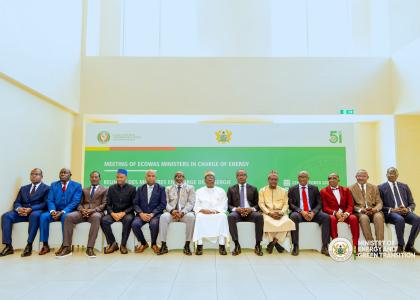
ECOWAS Energy Ministers Adopt Regional Directive on Battery Energy Storage Systems (BESS) and Other Energy Storage Technologies
-
WIRE Luncheon Celebrates Sisterhood and Women’s Leadership at CREF 2026 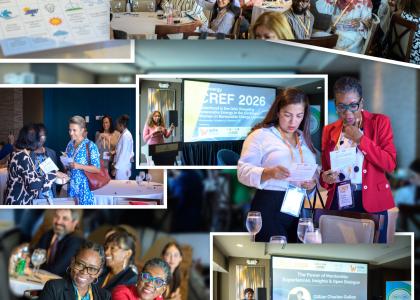
WIRE Luncheon Celebrates Sisterhood and Women’s Leadership at CREF 2026
-
CCREEE and OLACDE Sign Memorandum of Understanding to Strengthen Regional Energy Cooperation 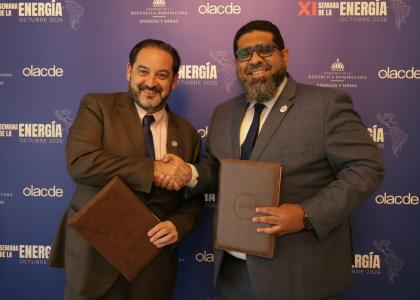
CCREEE and OLACDE Sign Memorandum of Understanding to Strengthen Regional Energy Cooperation
-
ECREEE Strengthens the Capacities of Clean Energy SMEs 
ECREEE Strengthens the Capacities of Clean Energy SMEs
-
ECOCONF Validates Regional Solar PV Certification Framework 
ECOCONF Validates Regional Solar PV Certification Framework
-
ECREEE and Partners Advance Sustainable Food Systems through AGRI-COOL 
ECREEE and Partners Advance Sustainable Food Systems through AGRI-COOL
-
CCREEE Launches Energy Investment Platform to Accelerate Caribbean’s Sustainable Energy Transition 
CCREEE Launches Energy Investment Platform to Accelerate Caribbean’s Sustainable Energy Transition
-
ECREEE and IEC Explore Opportunities for Cooperation 
ECREEE and IEC Explore Opportunities for Cooperation
-
Empower Her Future - Call for Role Models 
Empower Her Future - Call for Role Models
-
ECOWAS Concludes Regional Workshop in Lomé on Energy Efficiency Indicators and Data Validation 
ECOWAS Concludes Regional Workshop in Lomé on Energy Efficiency Indicators and Data Validation
-
ECOWAS Audit Committee Pays Courtesy Visit to ECREEE 
ECOWAS Audit Committee Pays Courtesy Visit to ECREEE